
Why Asset Amortization Matters for Small Businesses
Enterprises with an economic interest in mineral property or standing timber may recognize depletion expenses against those assets as they are used. Depletion can be calculated on a cost or percentage basis, and businesses generally must use whichever provides the larger deduction for tax purposes. Intangible assets have either an identifiable or indefinite useful life.
Amortization vs. depreciation: what’s the difference?
There are also differences in the methods allowed, including acceleration. Components of the calculations and how they’re presented on financial statements also vary. Per generally accepted accounting principles (GAAP), businesses amortize intangibles over time to help tie the cost of an asset to the revenues it generates in the same accounting period. The person or company obtaining rights to possess and use the property is the lessee. The accounting for a lease depends on whether it is a capital lease or an operating lease.

Depletion
- Apple Inc. had goodwill of $5,717,000,000 on its 2017 balance sheet.
- The oil well’s setup costs can therefore be spread out over the predicted life of the well.
- Because intangible assets are characterized by a lack of physical qualities, it is difficult to determine their existence, the value of their future benefits, and the life of these benefits.
- The difference is depreciated evenly over the years of its expected life.
- But when copyright is purchased by someone other than the creator, its cost may be substantial and should be capitalized.
- A business like Coca-Cola (KO) can contribute much of its success to brand recognition.
For example, consider a fictitious acquisition in which one company buys another. The company being sold may have had strong brand recognition, thus fostering a goodwill intangible asset. If the buying company blunders the handling of the new company, that goodwill value may get lost if it does not capitalize on the asset it acquired. Because intangible assets are characterized by a lack of physical qualities, it is difficult to determine their existence, the value of their future benefits, and the life of these benefits.
How Do I Know Whether to Amortize or Depreciate an Asset?
The AI algorithm continuously learns through a feedback loop which, in turn, reduces false anomalies. We empower accounting teams to work more efficiently, accurately, and collaboratively, enabling them to add greater value to their organizations’ accounting processes. It allows users to extract and ingest data automatically, and use formulas on the data to process and transform it. In addition to providing benefits, a franchise usually places certain restrictions on the franchisee. These restrictions generally are related to rates or prices charged; also they may be in regard to product quality or to the particular supplier from whom supplies and inventory items must be purchased.
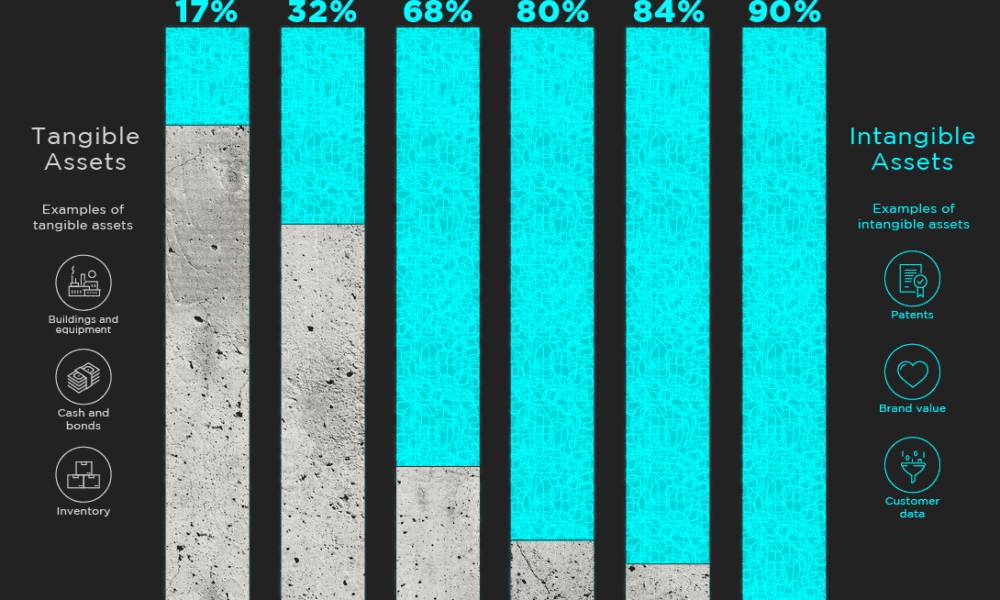
Depreciation helps to reflect the wear and tear on tangible assets during their lifetime. Several industries have companies with a high proportion of intangible assets. Tangible assets are physical and measurable assets that are used in a company’s operations. Tangible assets form the backbone of a company’s business by providing the means by which companies produce their goods and services.
For instance, a company may win a patent for a newly developed process, which has some value. That value, in turn, increases the value of the company and so must be recorded appropriately. Not all IP is amortized over the 15-year period set by the IRS, however. In those cases and select others, the intangibles are amortized under Section 167. Various industries have companies with a high proportion of tangible assets. Depreciation applies to expenses incurred for the purchase of assets with useful lives greater than one year.
Tangible assets are items you can touch, while intangible assets can not be touched. Both assets may have future economic the expensing of intangible assets is called value for a company in the future. Companies must also periodically review their intangible asset values for impairment.
Intangible assets are most commonly amortized using the straight-line method. Under this approach, the carrying amount of the asset is divided by the number of months of its expected useful life to arrive at a monthly amortization charge. Depreciation of some fixed assets can be done on an accelerated basis. Merriam-Webster provides some accelerate synonyms that include „quickened” and „hastened.” A larger portion of the asset’s value is expensed in the early years of the asset’s life. The key difference between amortization and depreciation involves the type of asset being expensed.